Why the style decides the budget
The service style is usually settled before the menu, because it drives almost everything else: how many staff you need, how long the meal takes, how much food is prepared, and how much equipment is rented.
A plated dinner needs the most kitchen and service staff but the least food per guest, because the portion is fixed. A buffet needs fewer servers but more food, because guests serve themselves and take more than a kitchen would plate. The saving on labour is often smaller than people expect once the extra food, chafing dishes and buffet tables are counted.
Plated (sit-down)
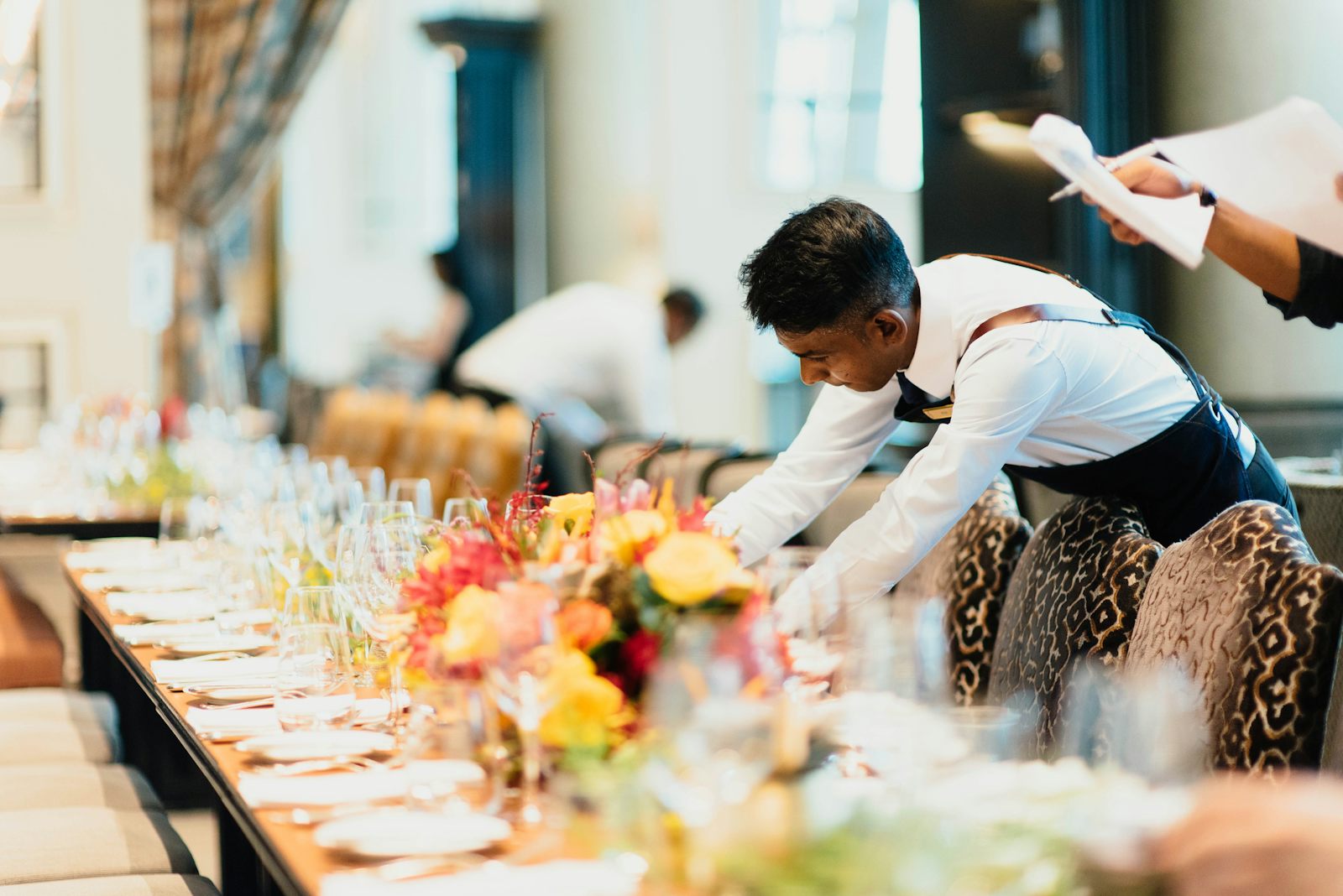
Guests are seated and each course is brought to the table. Portions are controlled, presentation is at its best, and the meal follows a clear timeline.
It is the most staff-heavy option. It also needs a final headcount and a meal choice per guest, which means place cards or meal indicators, and a kitchen with enough finishing space to send a whole course at once.
Buffet
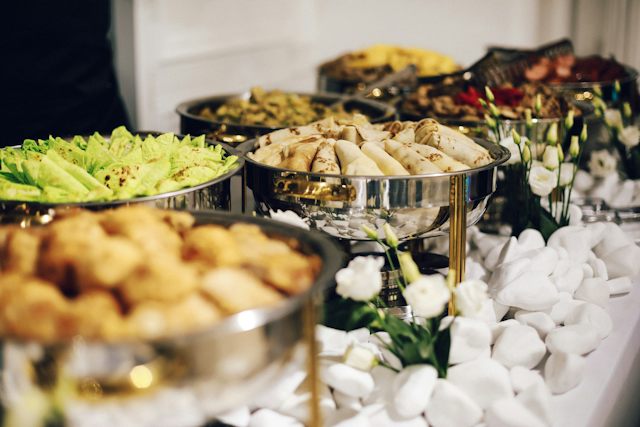
Guests queue and serve themselves. Fewer servers are needed, guests choose their own portions, and a wide menu is easy to offer.
Plan more food than a plated service, keep the queue moving by setting up double-sided lines, and remember that a single line serves roughly 50 to 75 guests before the wait becomes noticeable.
Family style
Platters are placed on each table and guests pass them. It feels generous and sociable and needs fewer servers than plated.
It costs table space, because platters compete with glasses and centrepieces, and it uses more food than plated service. Round tables of eight to ten work better than long tables.
Stations
Separate food stations around the room, often with a chef finishing dishes to order. Good for mingling events and for offering variety.
Stations spread the crowd out and remove the single queue, but each one needs its own equipment, and often its own attendant. Count the attendants as staff, not as extras.
Passed canapes (butler service)
Servers circulate with trays. Best for receptions and for the first hour of an evening event.
It needs more servers than a stationary display of the same food, because the trays have to keep moving. Passed service also makes it harder for guests to overeat early, which is sometimes the point.
Guide revised 18 September 2026. Figures here are planning rules of thumb, not guarantees. Send a correction.