The starting point
Most caterers begin from a total of roughly 500 to 700 grams (about 1 to 1.5 pounds) of food per adult for a full meal, spread across protein, starch and vegetables. That total is a planning figure, not a serving size. It exists so nothing runs out.
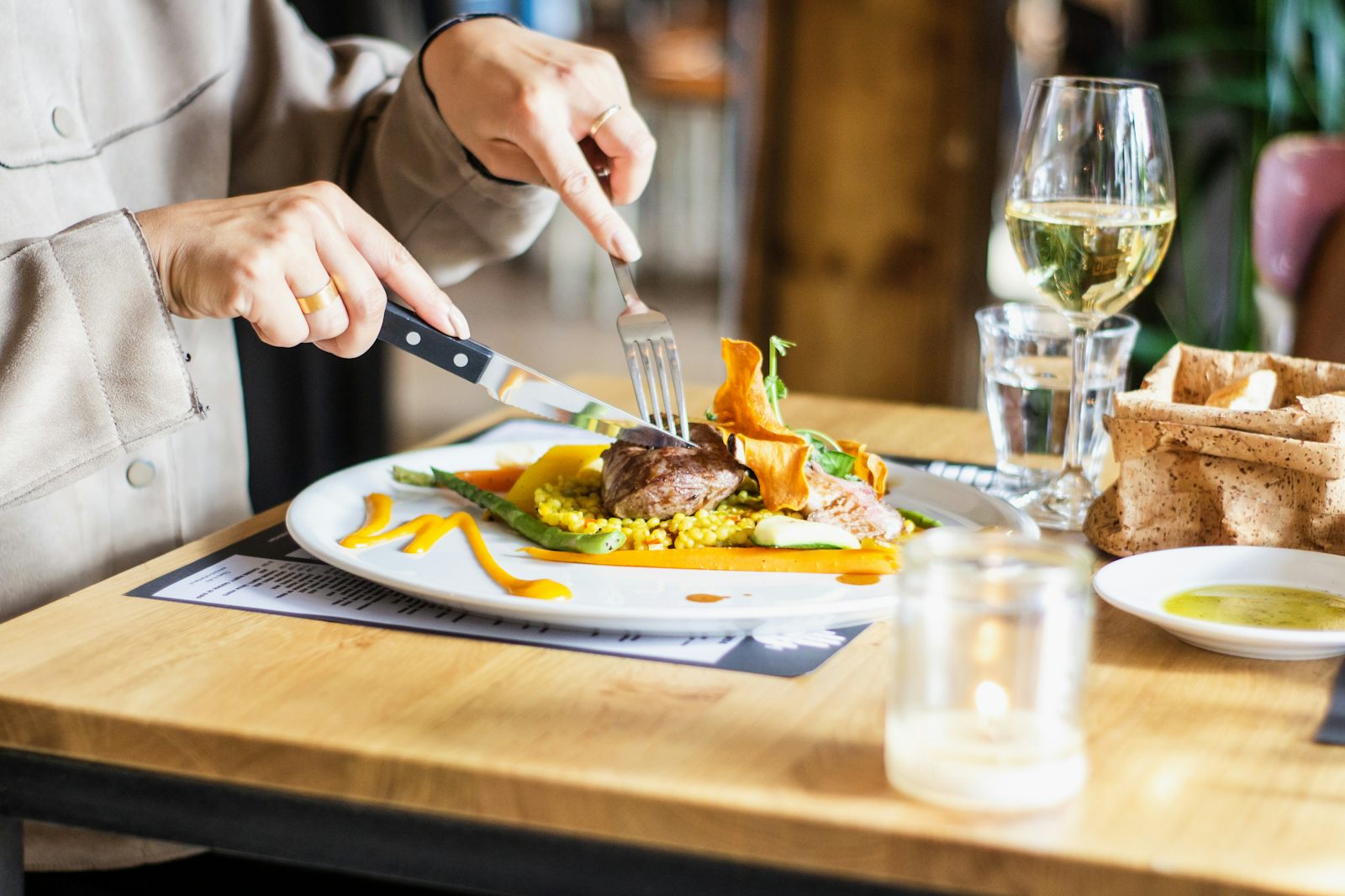
Common per-adult starting points for a main meal: 170 to 225 grams (6 to 8 ounces) of boneless protein, 115 to 170 grams (4 to 6 ounces) of starch, 115 to 170 grams (4 to 6 ounces) of vegetables, one to two bread rolls, and one dessert portion.
What moves the numbers up
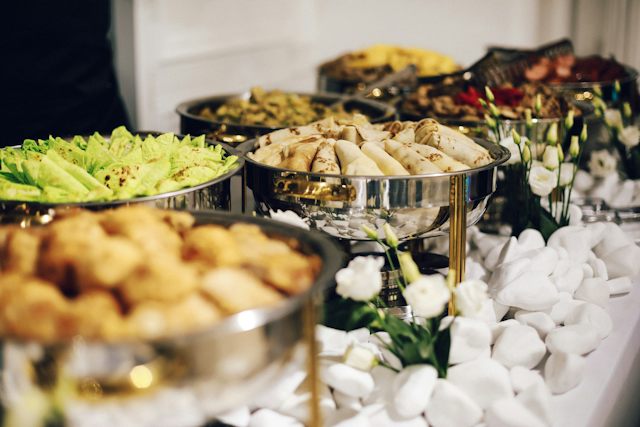
A buffet, because guests plate themselves. A long event, because people keep grazing. A young adult crowd. Heavy manual work before the meal, such as a build day or a sports event. Alcohol served for more than about two hours. A menu with one obvious star dish, which everyone takes first.
Bone-in meat needs a larger raw weight for the same edible portion. For bone-in cuts, plan roughly 340 to 450 grams (12 to 16 ounces) per adult.
What moves them down
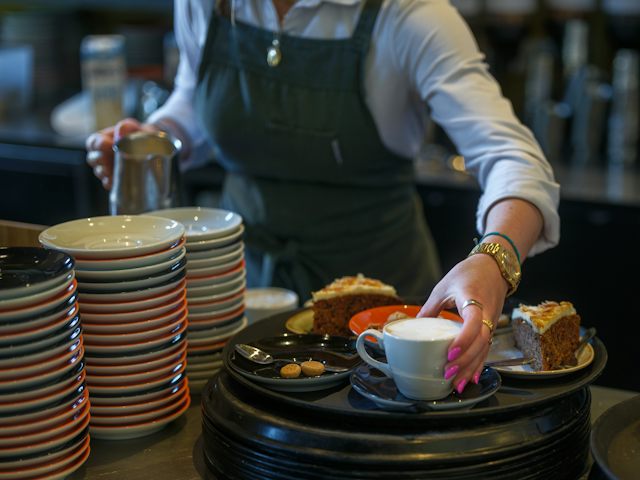
A plated service. A short lunch. A menu with many components, because each guest takes less of each. An older or mixed corporate crowd. A dessert table that follows a full meal.
Children are usually planned at about half an adult portion, and teenagers at an adult portion or more.
Canapes and receptions
For a reception before a meal, plan four to six pieces per guest for the first hour. For a reception that replaces the meal, plan ten to fourteen pieces per guest over two hours, across at least six varieties.
Cold items can be laid out in advance; hot items have to be timed, which is a staffing question as much as a kitchen one.
The waste question
Over-ordering is the normal failure, and it is expensive. The usual compromise is to plan full quantities for the signature dish and slightly under for the rest, then keep a small reserve in the kitchen rather than putting everything out at once.
Agree in the contract who owns the leftovers and whether they can legally be taken away. In many places a caterer cannot hand over food that has been held at the wrong temperature, whatever the client wants.
Guide revised 18 September 2026. Figures here are planning rules of thumb, not guarantees. Send a correction.